
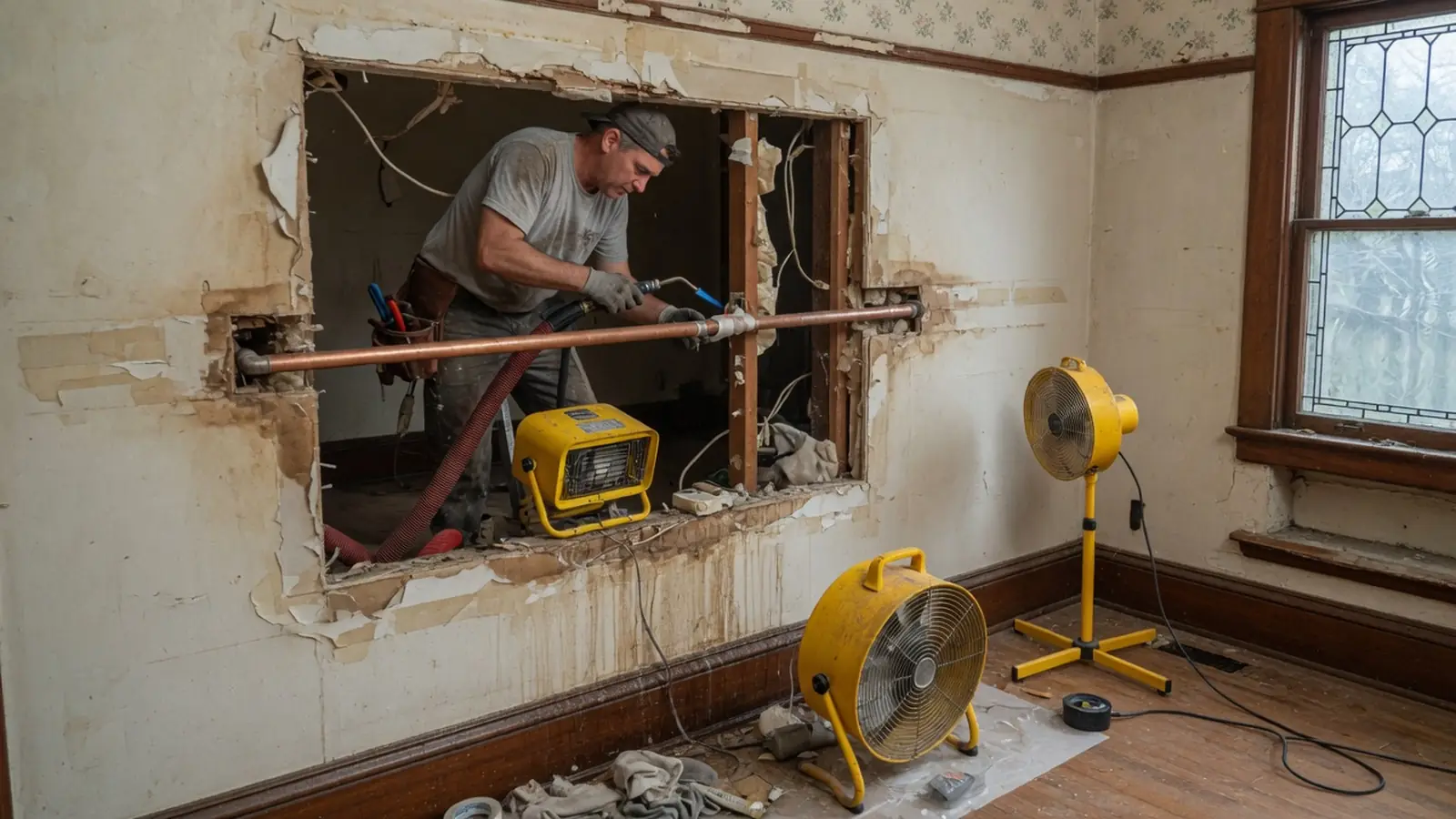
Pueblo Basement Flooding
When unexpected groundwater or burst pipes flood your lower level, immediate extraction stops structural ruin. Our experienced technicians deploy high-volume pumps and commercial dehumidifiers to dry your foundation and subflooring quickly. We help you navigate emergency steps and restore safety to your home.
Call (719) 555-0141 if water is running now.
Prefer to talk? (719) 555-0141
Dedicated Lower-Level Water Extraction
When dealing with lower level water emergencies, relying on comprehensive water damage restoration services prevents long-term moisture problems.
As homeowners often describe in online discussions after heavy rainstorms, hydrostatic pressure can force groundwater up through concrete slab floors and wall cove joints.
A pattern echoed in public discussions is whether DIY utility pumps and fans are sufficient when coping with several inches of basement water, or if professional extraction equipment is required to prevent mold.
Our field technicians arrive equipped with submersible pumps and heavy-duty extractors to pull standing water from saturated concrete quickly.
We inspect structural footers and baseboards using calibrated non-invasive moisture meters to map hidden migration behind finished drywall.
Every affected room is treated with antimicrobial sanitizing solutions to stop bacterial contamination on masonry and framing.
We keep property owners informed throughout the drying cycle with daily moisture log documentation.
Step-by-Step Basement Restoration
We follow a systematic drying methodology to extract water, sanitize surfaces, and protect your foundation.
- Emergency Shutoff & Assessment. Shutting off the main water supply immediately when a pipe bursts is the most critical initial action to prevent catastrophic interior flooding.
- Documentation & Mitigation. Photographing standing water and damaged plumbing prior to cleanup provides critical evidence required by insurance carriers to process claims.
- Active Water Extraction. Using wet vacs, towels, and fans to extract standing water while awaiting emergency responders curtails water spread and reduces repair costs.
- Deep Structural Drying. Our technicians run industrial air movers and low-grain dehumidifiers, particularly when addressing split supply lines from frozen pipes that soak framing.
Our Workmanship Standard
We monitor atmospheric humidity and structural moisture daily until every wall cavity and slab meets baseline dry standards. Our thorough moisture mapping protects framing integrity, preventing hazardous fungal growth through professional mold remediation protocols when materials are compromised.
Frozen Line Flood Recovery
Homeowners should stay home during the thaw following an arctic blast, as frozen pipes commonly split and release massive leaks once ice melts. Our crews extract rapid meltwater and stabilize subflooring.
Sump & Ejector Failure Cleanup
When a mechanical failure on your sump pump or ejector unit causes sewage or gray water to back up, we extract the mess and thoroughly disinfect the area. We remove contaminated subflooring layers to eliminate health hazards.
Groundwater & Slab Seepage
Heavy seasonal downpours often create hydrostatic pressure that forces moisture past concrete footings and expansion joints. We pump out standing water and set up commercial drying equipment to protect finished rooms.
Our Dedicated Mitigation Standards
We focus on thorough moisture extraction and documented structural drying for every home we serve, applying technical standards to prevent secondary damage.
- 11Zip Codes Served
- 4Service Areas
- 3Services Offered
Homeowners across the region count on our crew during sudden basement floods. Read how our rapid response, detailed moisture monitoring, and respectful job-site care helped local families protect their homes.
“Severe freezing rain iced over our driveway and slowed local travel, but the crew notified us right away and made it through with four-wheel-drive trucks. They set up commercial extraction units immediately and worked late into the night to make up for lost time. Our finished basement was completely pumped out before water could reach the wall framing.”
Marcus T.
“Having my elderly father living downstairs meant we needed the water removed without blocking wheelchair ramps or creating tripping hazards with loose hoses. The team took extra time to tape down cords securely and ran whisper-quiet dehumidifiers so he could rest comfortably in his bedroom. Their consideration for his safety made an overwhelming flood much easier to endure.”
Elena V.
“Another contractor quoted a slightly lower price but admitted they were only going to surface-dry the carpets without lifting them. The crew explained why trapped water beneath the subfloor would cause mold, so we chose their thorough mitigation plan instead. Seeing the moisture readings they logged proved that taking those extra steps saved our entire foundation.”
Derrick H.
“City code regulations required an official mechanical inspection after our water heater line ruptured and flooded the utility closet. The team documented every step of the cleanup, pulled the necessary clearance paperwork, and walked the municipal inspector through without a single citation. Everything was resolved cleanly on the very first visit.”
Brenda K.
Frequently Asked Questions
Can flooded basement carpeting and padding be sanitized and dried in place, or does saturated padding always require replacement?
Saturated carpet padding holds contaminants and must be replaced, while synthetic carpet can often be disinfected and dried if mitigated quickly. Dense padding traps dirty water against the subfloor and cannot be adequately sanitized, making removal essential to prevent hidden mold growth.
How long does it typically take to dry a flooded basement completely?
Complete structural drying typically takes between three to five days depending on water volume, ambient humidity levels, and building materials. Technicians monitor moisture levels daily with digital hygrometers to confirm deep drying before removing commercial dehumidifiers.
Does homeowners insurance cover emergency basement flooding cleanup?
Homeowners insurance generally covers sudden indoor pipe bursts, but rising groundwater and sewer backups typically require specific policy riders. Direct documentation and moisture records from certified mitigation crews help support rapid claim filing with your adjuster.
Are DIY utility pumps and shop vacuums sufficient for six inches of basement water?
Utility pumps remove bulk standing water, but professional high-volume extraction and industrial dehumidification are vital to stop mold growth. Without commercial air movers and structural moisture meters, hidden moisture remains trapped inside framing cavities and concrete foundation pores.
Why does groundwater seep through basement concrete floors after heavy rains?
Saturated soil creates external hydrostatic pressure that forces moisture upward through hairline concrete cracks and perimeter cold joints. Installing relief systems and extracting standing water prevents long-term moisture accumulation and protects stored personal belongings.